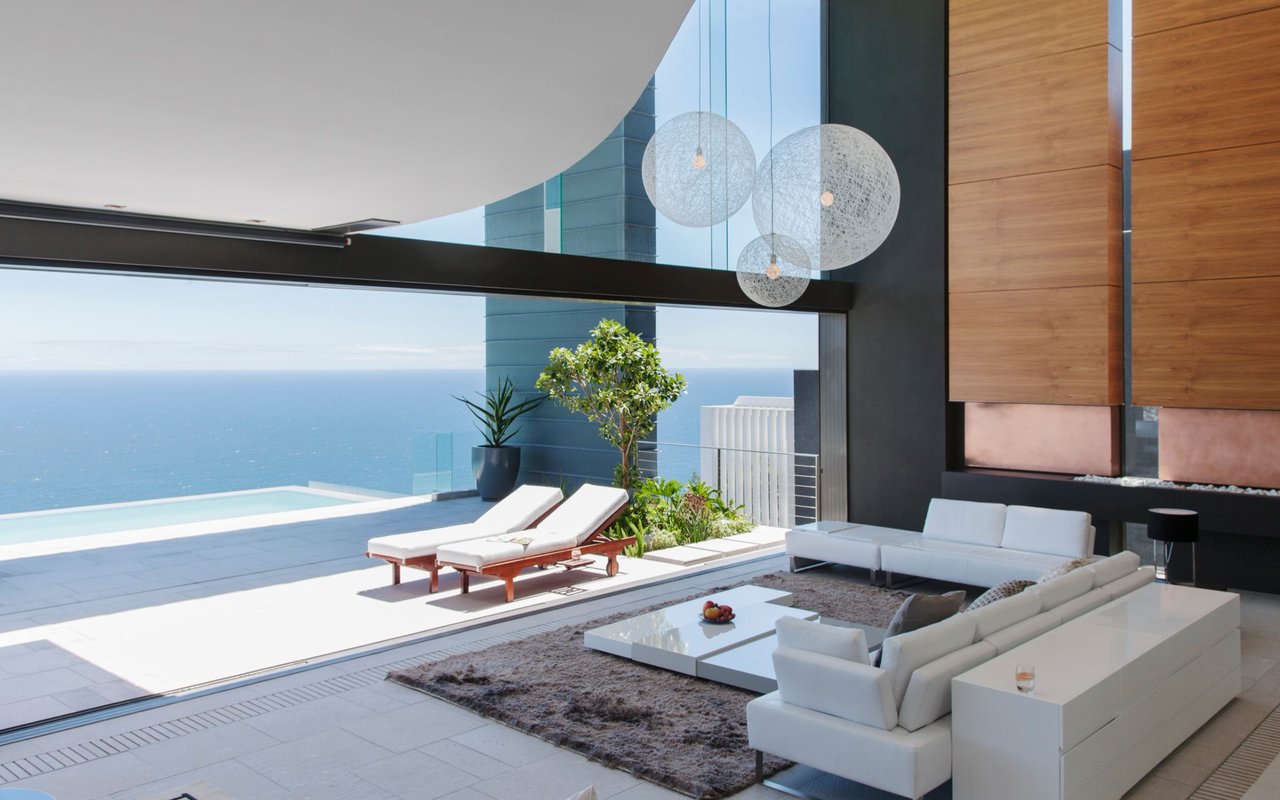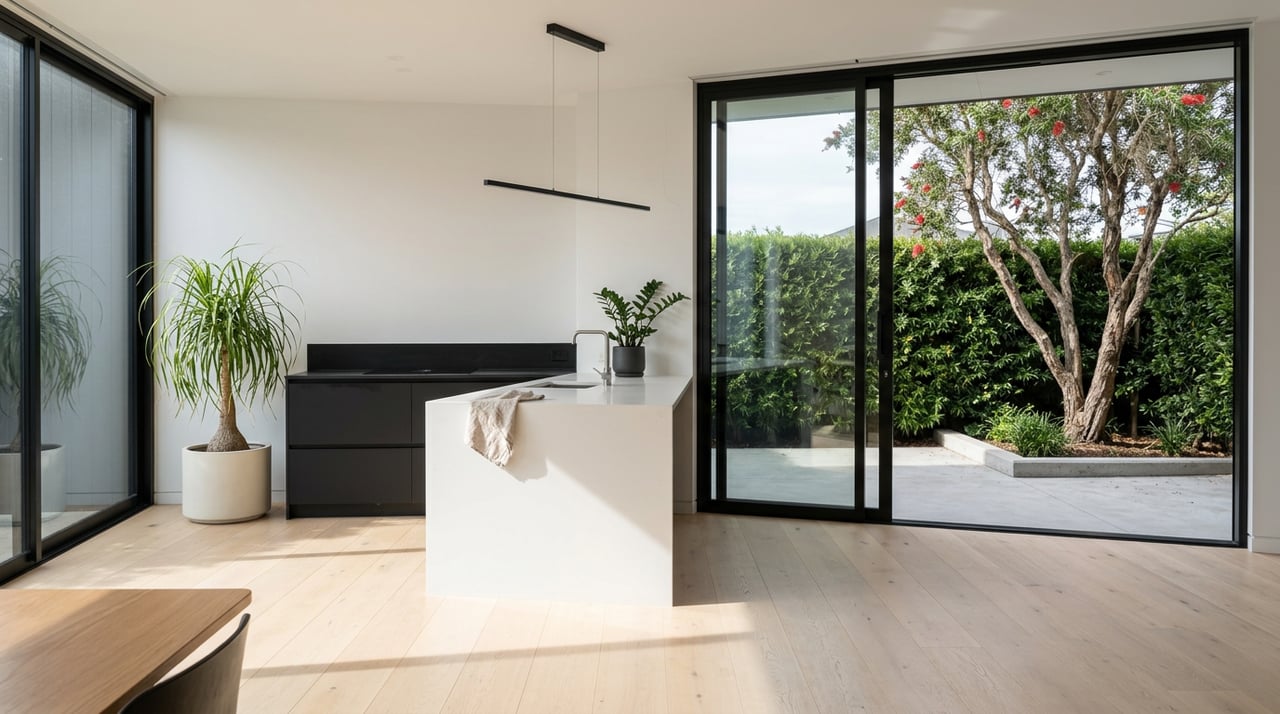
Two three-bedroom houses, ten minutes apart on foot, both listed under "Mar Vista." One sits on a wide lot behind a homeowners association sign, walking distance to a cul-de-sac and a strong middle school. The other sits two blocks off Venice Boulevard, close enough to hear the bike lane traffic, surrounded by mixed-use storefronts and a farmers market crowd on Sundays. Compare their asking prices and they look almost interchangeable. Live in either one for a month and they feel like different neighborhoods entirely.
That is not a marketing quirk. It is a governance fact. Mar Vista is not one market wearing one name. It is six officially bounded zones administered by the Mar Vista Community Council, each with its own elected director, and the median price you see quoted on any portal blends all six into a single number that describes none of them accurately.
Six Zones, One Name
The Mar Vista Community Council is not an informal neighborhood association. It is a city-sanctioned neighborhood council with a thirteen-member board: six zone-specific directors, six at-large directors, and one community director. The council's own map lays out precise, street-level boundaries for each zone. Zone 1 sits south of National Boulevard, bounded by the 405 to the west. Zone 2 runs between the 10 Freeway and National Boulevard, east of Centinela Avenue. Zone 3 falls between National and Palms Boulevards. Zone 4 sits between Palms and Venice Boulevard. Zone 5 runs south of Venice Boulevard to the Culver City line. Zone 6 sits north of Venice Boulevard, stretching toward the Santa Monica Airport area.
These boundaries are not cosmetic. They carry real policy weight. In January 2026, the council's Planning and Land Use Management Committee took up a proposal to designate part of Zone 6 as an alcohol-sensitive zone, a move that would tighten conditions on restaurants seeking to serve alcohol in that specific stretch of the neighborhood. That is not a debate happening at the "Mar Vista" level. It is a debate happening at the Zone 6 level, decided by people who live, work, or own property within that zone's boundary and nowhere else. If you buy a house in Zone 3, that particular fight has nothing to do with you. If you buy in Zone 6, it might shape which restaurants open near your block for years.
This is the piece the median price cannot show you. A number that blends six zones with six different governance conversations, six different school assignments, and six different housing stocks is not a lie, but it is not a description of any single street either.
What Each Zone Actually Buys
Here is how the character differs, using the terms the neighborhood associations and school district actually use for themselves.
| Zone | Documented Character | School Ties |
|---|---|---|
| Zone 1, Westside Village | Eastern edge of the council area, an easy commute to Century City and Culver City | Clover Avenue Elementary (zone 1/2 boundary) |
| Zone 2, North Westdale | Family-centric pocket with an active homeowners association | Richland Avenue Elementary, Daniel Webster Middle |
| Zone 3, Westdale-Trousdale | Mid-century lines, expansive lot footprints, storybook single-family homes | — |
| Zone 4 | Home to the 1912 Oval District and the surviving mid-century tract along Beethoven, Meier, and Moore Streets | — |
| Zone 5 | South of Venice Boulevard, where the neighborhood's multi-family and rent-stabilized buildings concentrate | Mark Twain Middle (zone 5/6 boundary) |
| Zone 6 | North of Venice Boulevard, the walkable end of the corridor, closest to the ongoing Great Streets improvements | Beethoven Elementary, Walgrove Elementary, Mark Twain Middle |
Notice what the table does not show: a single number for "Mar Vista" that applies to all six. A buyer comparing Zone 2's North Westdale against Zone 6 is not comparing two flavors of the same product. They are comparing a homeowner-association suburb against a mixed-use, transit-adjacent corridor that happens to share a mailing address.
The Median Is Blending Two Different Products
As of March 2026, Mar Vista's median sale price stood at $2.1 million, up 8.2 percent year over year, with a median price per square foot of $1.22 thousand, up 11.5 percent over the same period. As of August 9, 2026, the median list price across active Mar Vista listings had climbed to $2.3 million, with an average of roughly $1,010 per square foot across current inventory.
Read those two numbers side by side and a gap appears. Recent sold prices ran about $1.22 thousand per square foot in March. Current asking prices average close to $1,010 per square foot in August. That is not a market cooling. It is a market where more of the current inventory sits in the zones with larger, older lots and lower per-square-foot pricing, the kind of housing stock the Westdale-Trousdale and North Westdale pockets are known for, while the March closings likely leaned harder toward the denser, walkable Zone 4 through 6 corridor where per-square-foot value runs higher.
This is the mechanism the citywide median cannot isolate. When the mix of what is selling shifts from one cluster of zones to another, the median moves for reasons that have nothing to do with whether any individual home gained or lost value. A buyer who only reads the headline number risks concluding the market softened when what actually happened is that inventory shifted zones.
For a buyer comparing Mar Vista against another Westside neighborhood, the practical takeaway is this: ask which zone the comp actually sits in before treating the median as a stand-in for what your specific budget buys.
The Corridor Pulling Zones Four Through Six Upward
Part of why the walkable end of Mar Vista commands a premium traces directly to public investment along Venice Boulevard. The corridor was named one of the city's first Great Streets projects, and the improvements have compounded over time: upgraded sidewalks, high-visibility crosswalks, and bus stop upgrades with solar power and free WiFi at Venice and Centinela Avenues. More recently, the Los Angeles Department of Transportation and Metro completed a broader Venice Boulevard Safety and Mobility Project that added a 24-hour dedicated bus lane and parking-protected bike lanes, improving connections between Palms and Mar Vista for the nearly 47,000 residents living within a five-minute walk of the project area. Metro's Line 33 carries an average of 20,000 riders a day along this stretch, with about 8,000 of them boarding or departing within the project boundary, and the corridor now links more directly to the Metro E Line at the Culver City station.
The retail response has followed the infrastructure. Cafe Laurent draws a steady brunch crowd. Beethoven Market has served the neighborhood since 1949. Little Fatty has built a following for its Taiwanese menu, and Mavro Coffee has emerged as the corridor's newest coffee stop. Further south on Washington Boulevard, Hamakaze Sushi Izakaya, owned by chef Nick Nishi, has built its own following. None of this commercial activity is evenly distributed across Mar Vista's six zones. It concentrates precisely where the Great Streets investment concentrated, which is Zones 4 through 6, the same zones pulling the neighborhood's median upward.
Zones 1 through 3 are not worse for this. They trade the walkable retail corridor for larger lots and a quieter, homeowner-association feel closer to Culver City's tech employers. That is a genuine tradeoff, not a hierarchy.
The ADU Variable Isn't Evenly Distributed Either
California's accessory dwelling unit law gives most single-family lots in Mar Vista a by-right option to add a detached unit up to 1,200 square feet, plus a junior ADU up to 500 square feet, with city review handled administratively rather than through discretionary approval. That sounds like a neighborhood-wide advantage. It is not distributed evenly across the six zones.
Zone 3's Westdale-Trousdale pocket is documented for its expansive lot footprints, the kind of space that accommodates a detached ADU without much friction. Zone 5, by contrast, already concentrates the neighborhood's multi-family and rent-stabilized buildings south of Venice Boulevard, properties that are more likely to already be maximizing their lot's income potential through existing units rather than sitting on undeveloped ADU capacity. A buyer running the numbers on a $2 million-plus purchase in Zone 3 may have real ADU upside to factor into long-term affordability. The same budget spent on a Zone 5 property may already be buying that income stream in a different form.
Before comparing Mar Vista to any other Westside listing, it is worth confirming which of these two positions your specific lot occupies. The state law sets a floor. Setbacks, sewer capacity, and slope still determine what a specific address can actually build.
Before You Compare a Mar Vista Listing to Anywhere Else
- Ask which of the six zones the listing sits in, not just the ZIP code
- Check the specific elementary and middle school assignment rather than assuming "Mar Vista Elementary" applies neighborhood-wide
- Separate the asking price from the most recent sold comps in that same zone
- Confirm whether the lot has genuine ADU capacity or whether the property type already reflects a multi-family use
Frequently Asked Questions
Is 90066 a better ZIP code than 90034 for Mar Vista? Neither is objectively better. They serve different priorities. The 90066 side leans toward the walkable Venice Boulevard corridor and the Great Streets improvements. The 90034 side leans toward larger suburban lots and proximity to Culver City's employers. The right fit depends on what a buyer values day to day.
Do all six zones share the same schools? No. School assignments follow zone-specific boundaries. Richland Avenue Elementary and Daniel Webster Middle serve North Westdale families in Zone 2. Beethoven and Walgrove Elementary serve Zone 6. Mark Twain Middle serves both Zone 5 and Zone 6. A buyer should confirm the exact assignment for a specific address rather than assuming based on the neighborhood name alone.
Does an older Mar Vista home automatically qualify for an ADU? State law provides a baseline right, but it does not override site-specific conditions. Setbacks, existing structures, slope, and sewer and electrical capacity still need to be verified for the exact parcel before assuming ADU potential.
If you are weighing a purchase or a sale across Mar Vista's six zones, the zone-level detail is where the real decision lives, not the headline median. Vida Ash Properties works this corridor block by block, from the Oval District's mid-century tract to the Westdale-Trousdale lots with room to build. Request a Free Home Valuation & Marketing Plan and we will walk through exactly which zone your address sits in and what that means for your number.