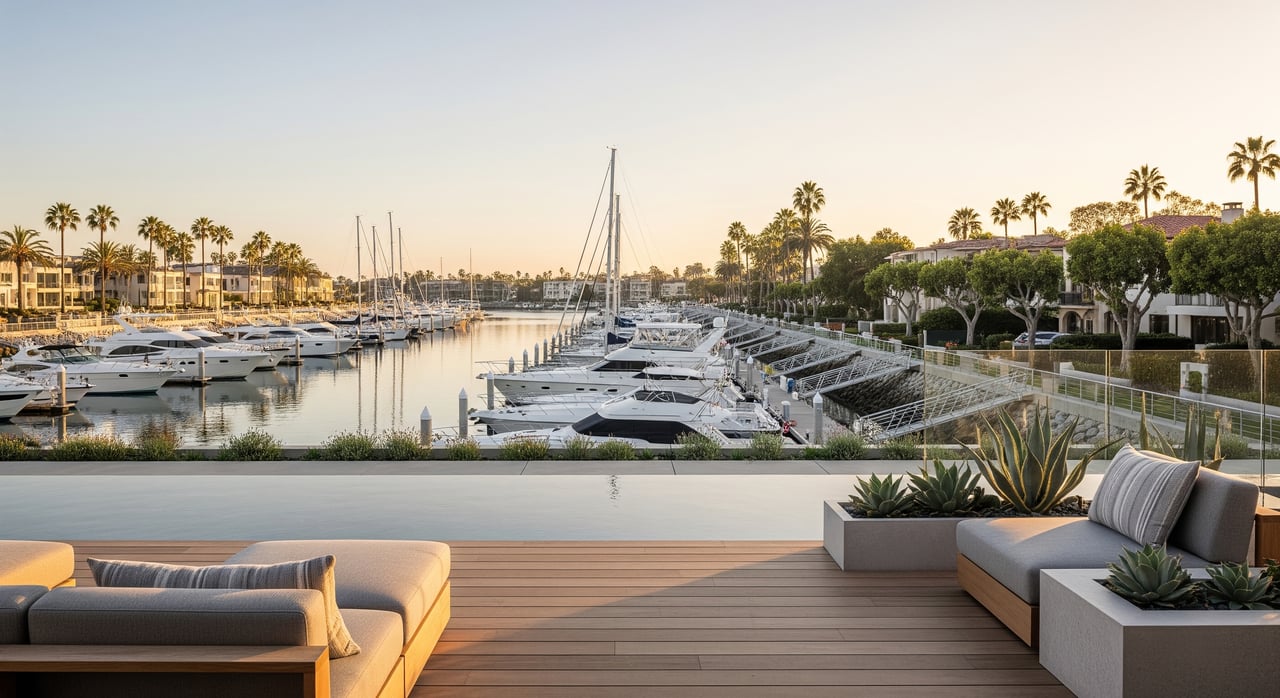
Harbor views or a quieter inland street? In Marina del Rey, that single choice shapes your budget, daily rhythm, and long-term returns. If you are weighing a marina-adjacent condo against an inland unit, you are not alone. The neighborhood offers both, and each comes with distinct costs, benefits, and due diligence needs. This guide gives you a clear, local comparison so you can match your purchase to your lifestyle and investment plan. Let’s dive in.
Marina del Rey at a glance
Marina del Rey is an unincorporated area of Los Angeles County centered on a small-craft harbor. Homes here are mostly condominiums and apartment-style buildings. Direct waterfront single-family lots are rare, so most buyers compare condos with marina frontage or views to inland condos a few blocks away.
What counts as waterfront vs inland
- Waterfront or marina-adjacent: Units with direct harbor frontage, dock access, or unobstructed basin or ocean views.
- Bay-view or elevated view: Higher-floor units with partial water or ocean views that cost less than true waterfront.
- Inland Marina del Rey: Condos farther from the basin, often north of Washington Boulevard, usually without views or slips and with lower monthly charges.
Who each option fits
- Waterfront tends to fit buyers who value views, walkability to the marina, and potential boat access.
- Inland tends to fit buyers who prioritize lower carrying costs, a quieter setting, and broader resale appeal.
Price drivers and premiums
Waterfront and direct-view properties typically command a premium over inland units. In Marina del Rey, the size of that premium depends on details that vary building by building.
What drives the premium
- View quality: Unobstructed harbor or ocean views price higher than partial or no view.
- Slip rights: Deeded or long-term assigned boat slips are scarce and add value.
- Building profile: Amenities, age, reserves, and maintenance history affect pricing.
- Floor and orientation: Higher floors with stronger views usually sell for more.
Liquidity considerations
- Waterfront units draw strong lifestyle interest and can sell well in strong markets. In softer markets, the smaller pool of premium buyers can slow absorption.
- Inland units often appeal to a broader audience and may sell faster in slower cycles.
How to price your choice
Compare recent sales of similar units in the same building whenever possible. Ask your agent for building-level comps that separate direct-view from non-view units. Premiums are not uniform across the Marina, so rely on current data rather than averages.
Ownership costs: HOA, insurance, upkeep
Monthly and long-term costs differ meaningfully between waterfront and inland buildings. Understanding the budget before you write an offer helps you avoid surprises.
HOA fees and what to review
Waterfront HOAs are often higher because they may include:
- Dock and marina infrastructure upkeep
- Seawall or shoreline work and potential special assessments
- Saltwater-related common area maintenance
- Security, concierge, or marina management services in some luxury buildings
Inland buildings often have lower dues with fewer shared amenities. Always review the latest HOA budget, reserve study, meeting minutes, and assessment history. Pay special attention to line items for seawall, pier, or dredging work.
Insurance and coastal hazards
- Flood risk: Many marina-adjacent properties sit in mapped FEMA coastal flood zones. Lenders often require flood insurance for high-risk parcels. Ask for any elevation certificate and verify the specific parcel’s flood zone.
- Earthquake risk: Earthquake exposure exists across Los Angeles. Standard homeowners insurance does not include earthquake coverage. Explore options through providers that serve California homeowners.
- Salt air and systems: Proximity to saltwater can increase wear on metal, HVAC systems, windows, and building envelopes. Healthy reserves and maintenance planning matter.
Get quotes for homeowners, flood, and earthquake coverage during due diligence. Insurance costs vary by building and location.
Boat slips and marina realities
Boat slips are a defining feature for some waterfront buildings and a key driver of value for boat owners.
Slip types and value impact
Slips in Marina del Rey are managed primarily by the County, though some buildings control slips privately. The key distinctions are:
- Deeded or long-term assigned slips: Scarce and usually add significant value
- County-leased or privately leased slips: Subject to waitlists and variable monthly costs
Confirm slip status in writing, including any waitlists, fees, and transfer rules. Slip rights can materially affect both purchase price and monthly expenses.
Budgeting for boating
Boat ownership has separate costs beyond your housing budget. Plan for moorage, storage, fuel, maintenance, and boat insurance in addition to any HOA or slip fees.
Lifestyle trade-offs to expect
The Marina delivers a distinct coastal atmosphere. Whether you live on the water or inland, day-to-day experience matters as much as the price tag.
Noise and activity
- Waterfront pros: A vibrant maritime scene with boats, paths, and waterfront dining
- Waterfront cons: Engine noise, horns, seasonal events, and occasional late-night activity
- Inland pros: Generally quieter with fewer marina-related sounds
Visit any target building at multiple times, including early morning, evening, and weekends, to map real noise patterns.
Parking and access
- Parking: Most condos include at least one assigned space. Some waterfront buildings add guest parking and EV charging.
- Street parking: Often regulated and tighter during events.
- Commuting: The Marina is close to LAX, Venice, Santa Monica, and Culver City. Expect peak-hour congestion along major corridors. Bike and pedestrian access is strong near the marina and beach.
Everyday comfort and upkeep
Salt air can accelerate wear on balconies, railings, windows, and paint. Low elevation and proximity to water may increase humidity, which can lead to mold issues in poorly ventilated homes. Review any remediation history and warranties during inspections.
Rental potential and rules
Rules for rentals depend on county regulations and your HOA, which often imposes stricter standards than local law.
Short-term rental landscape
Marina del Rey is in unincorporated Los Angeles County, and short-term rental rules differ from the City of Los Angeles. County rules have tightened and can require registration, safety steps, and occupancy limits. Many HOAs prohibit or restrict short-term rentals regardless of county allowances.
Long-term rental demand
Long-term demand is supported by nearby employment hubs in Silicon Beach, Santa Monica, and LAX. Inland units can be attractive to long-term renters seeking lower monthly costs. Buildings that permit short-term rentals can generate higher revenue but may bring more wear and higher management and insurance costs.
Taxes and investment notes
Rental income is taxable, and short-term rentals may trigger transient occupancy taxes. If you plan a 1031 exchange or have questions about capital gains, consult your tax advisor. Waterfront appreciation often reflects both scarcity and coastal risk factors.
Which option fits you
Use this quick decision guide to align your choice with your goals.
Choose waterfront if
- You value a direct harbor or ocean view more than minimizing monthly costs
- You want on-the-water access or dock proximity
- You plan to hold long term and value lifestyle and scarcity
Choose inland if
- You want lower HOA dues and insurance costs
- You prefer a quieter setting with broad resale appeal
- You need flexibility for long-term leasing and a wider tenant pool
Hold period and exit plan
- Shorter hold: Inland may provide steadier liquidity in softer markets.
- Longer hold: Waterfront can deliver strong lifestyle value and scarcity benefits but with higher carrying costs.
Buyer due diligence checklist
- Get building-level comps for view and non-view units, ideally within the same building.
- Review HOA CC&Rs, bylaws, meeting minutes for the past 12 to 24 months, budgets, reserve studies, and any special assessments.
- Confirm boat slip status: deeded, assigned, County-leased, or private. Ask about waitlists, transferability, and monthly fees.
- Verify hazards: FEMA flood zone designation, any elevation certificate, past flood claims, and long-term sea-level exposure.
- Obtain quotes for homeowners, flood, and earthquake insurance for the specific address.
- Inspect for coastal wear: building envelope, balcony and railings, corrosion, windows, HVAC, and any signs of water intrusion or mold.
- Test noise and access at morning, evening, and weekend times, including event nights.
- Confirm parking details for residents and guests. Ask about permit rules and enforcement.
- For rentals: Verify county and HOA rental policies, any required registrations, minimum lease terms, and historic rents for similar units.
- Work with a local agent experienced in Marina del Rey waterfront transactions.
Choosing between waterfront and inland in Marina del Rey comes down to trade-offs between lifestyle, cost, and risk. With clear priorities, building-specific comps, and focused due diligence, you can buy with confidence and enjoy the coastal life that fits you best. If you want hyperlocal guidance and a steady hand from search to closing, reach out to Vida Ash for personal representation backed by market data and a commitment to donate 10% of net commission to a charity you choose.
FAQs
Is the Marina del Rey waterfront premium worth it
- It depends on your priorities and time horizon. Waterfront delivers lifestyle and scarcity benefits but usually comes with higher dues and hazard exposure.
How do HOA fees differ by location in Marina del Rey
- Waterfront buildings often carry higher dues due to docks, seawalls, and saltwater maintenance. Inland buildings tend to have lower dues and fewer marina-specific costs.
Can I get flood and earthquake insurance for a waterfront condo
- Flood insurance is typically required in high-risk FEMA zones and is available through public or private markets. Earthquake insurance is separate from standard policies and can be added through specialized providers.
Are short-term rentals allowed in Marina del Rey condos
- Rules vary. Marina del Rey follows Los Angeles County regulations, and many HOAs prohibit or limit short-term rentals. Always confirm both county rules and HOA bylaws.
What is the best way to check noise at a Marina del Rey building
- Visit at multiple times, including early mornings, weekday evenings, weekends, and during events, to experience real noise patterns before you commit.